If you are running TikTok ads today, one big creative question keeps coming up: should you invest in user generated content style ads or polished studio produced ads? Many brands assume higher production value automatically means better performance. On TikTok, that assumption often fails.
TikTok is a behavior driven platform where authenticity, relatability, and speed of connection matter more than cinematic quality. Still, studio ads are not useless. The real answer depends on funnel stage, audience awareness, and creative strategy. Let’s break down what actually converts better on TikTok and why, using performance data and practical campaign patterns.
What is the difference between UGC ads and studio ads on TikTok?
UGC ads are designed to feel like native, creator style content, while studio ads look more like traditional commercials. The difference is not just visual quality. It is psychological positioning.
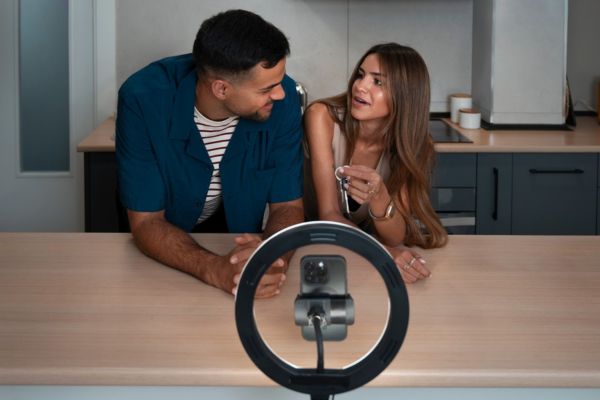
UGC style ads usually feature real people, handheld cameras, natural lighting, and unscripted or lightly scripted delivery. They often look like product reviews, tutorials, or personal stories. Studio ads typically include professional lighting, sets, actors, motion graphics, and tighter brand control.
On TikTok, users scroll fast and decide within about 1 to 2 seconds whether to keep watching. According to multiple mobile attention studies, vertical social videos lose over 40 percent of viewers in the first three seconds if the content feels like an obvious ad. UGC style creative blends into the feed and reduces that early drop off.
That blending effect is a core reason UGC often outperforms in cold traffic campaigns.
Why do UGC style ads often convert better on TikTok?
UGC ads tend to convert better because they trigger trust and pattern matching in the viewer’s brain. People recognize them as content first, advertising second.
TikTok’s internal trend reports have repeatedly shown that native style ads can drive up to 2 times higher engagement rates compared to highly polished brand creatives. Third party performance agencies frequently report 20 to 50 percent lower cost per acquisition when using strong creator style ads versus studio spots in prospecting campaigns.
There are a few psychological drivers behind this:
Viewers see a person, not a brand. That reduces resistance.
The message feels like a recommendation, not a pitch.
Imperfection signals honesty and relatability.
Behavioral research in advertising shows that peer style recommendations are trusted significantly more than brand claims. Nielsen trust studies have long found that over 80 percent of consumers trust recommendations from individuals more than direct brand messaging.
UGC style TikTok ads tap directly into that bias.
When do studio ads perform better on TikTok?
Studio ads perform better when clarity, demonstration, and brand authority matter more than relatability. They are especially useful in mid and bottom funnel stages.
If your product is complex, technical, or highly visual, studio production can increase understanding and perceived credibility. Categories like fitness equipment, beauty devices, and tech accessories often benefit from close up shots, controlled lighting, and clear feature callouts.
Data from ecommerce creative tests often shows this pattern:
UGC wins on click through rate.
Studio ads sometimes win on conversion rate after click.
For example, a UGC ad might generate a 1.8 percent click through rate while a studio ad generates 1.1 percent. But if the studio ad explains the product more clearly, its landing page conversion rate might be 3.5 percent versus 2.2 percent for the UGC traffic. In that case, final acquisition costs can be similar.
Studio creative also helps when brands need message control, compliance language, or consistent visual identity across markets.
How does audience awareness level change what converts?
Audience awareness plays a huge role in which format converts better. Cold audiences and warm audiences respond differently to creative style.
Cold audiences are discovery mode users. They are not searching for your brand. They are scrolling for entertainment or information. UGC style ads usually work better here because they match platform behavior and reduce friction. Performance teams often report that UGC style prospecting ads can produce 30 to 70 percent higher thumb stop rates.
Warm audiences already know you or have visited your site. They are closer to decision. Studio ads with structured demos, offer overlays, and proof points often perform well here because viewers are evaluating, not just discovering.
A practical funnel pattern looks like this:
Top funnel favors UGC style hooks and stories.
Mid funnel mixes UGC testimonials with clearer product demos.
Bottom funnel leans more into structured, studio quality proof and offers.
Matching creative style to awareness stage often beats picking one format only.
Do TikTok algorithms favor UGC style ads?
TikTok’s delivery system favors engagement signals, not production category labels. But UGC style ads often generate the signals the algorithm likes.
The platform optimizes around watch time, replays, shares, comments, and clicks. UGC style content typically produces more natural engagement because it feels like organic content. That leads to stronger early performance signals, which can reduce CPM and improve reach.
Many performance teams, including groups like Vibe Marketing working alongside heyoz partners structured like a Tiktok ad agency model, observe that native style creatives exit the learning phase faster because they generate interaction sooner.
It is not that the algorithm has a rule that says UGC wins. It is that UGC more often produces the behaviors the system rewards.
What do real performance tests usually show?
Large scale creative tests usually show that UGC wins more often, but not always, and rarely alone. Mixed creative stacks tend to perform best.
Across multi account TikTok tests published by several performance marketing groups, results often look like this:
UGC style ads produce the top performer about 60 to 70 percent of the time in cold acquisition tests.
Studio ads produce the top performer about 20 to 30 percent of the time.
Hybrid ads, which are creator shot but professionally edited, fill the rest.
Another repeated finding is creative fatigue curves. UGC style ads often fatigue faster because they rely on novelty and personality. Studio ads sometimes last longer because their value is tied to product clarity rather than creator presence.
Accounts that refresh UGC creatives every 7 to 14 days often maintain stable CPAs, while those that reuse the same creator ad for a month often see costs rise by 30 percent or more.
Testing volume matters more than format loyalty.
Should you choose one format or combine both?
Combining both formats almost always beats choosing only one. The smartest TikTok advertisers build creative portfolios, not single style pipelines.
A balanced creative system might include:
Creator style problem solution videos.
Customer testimonial clips.
Studio product demos.
Offer focused motion graphic ads.
This mix allows the algorithm to match different creatives to different micro audiences. One user responds to story. Another responds to proof. Another responds to visuals.
Data from multi creative ad group tests often shows that ad groups with 5 to 8 diverse creative styles outperform single style groups by a meaningful margin in both stability and scale potential.
Creative diversity is a performance lever.
How should brands test UGC vs studio ads correctly?
Proper testing requires controlled structure, not random posting. Many brands get misleading results because they change too many variables at once.
A cleaner test approach includes running both formats with:
The same audience targeting.
The same optimization goal.
Similar video length ranges.
Comparable offers and hooks.
Give each variation enough spend to earn statistically useful impressions. Many media buyers aim for at least 10,000 impressions per creative before making decisions. Lower volume results are often noisy.
Measure more than just conversions. Track thumb stop rate, average watch time, click through rate, and cost per landing page view. These early indicators often predict which format will scale.
Testing discipline turns creative debate into measurable truth.
Conclusion
On TikTok, UGC style ads usually convert better for cold audiences because they feel authentic, native, and trustworthy. Studio ads often perform better when clarity, authority, and structured product education are required. The real winner is not one format over the other. It is the brand that knows when and how to use each.
Performance data across accounts consistently shows that creator style content drives stronger engagement signals, while polished creative supports decision stage conversion. Brands that build mixed creative systems, test methodically, and refresh often tend to see the lowest acquisition costs over time.
If you treat TikTok as a creative testing platform instead of a traditional ad channel, the UGC versus studio question becomes less about preference and more about purpose. That shift is where consistent conversion gains usually begin.